Explore Deel’s SEO strategy and learn how it built search authority through international SEO, programmatic content, country pages, and global hiring topics.
TL;DR
- Deel doesn’t rank for keywords; they own the entire global employment journey in search
- Its SEO is built to drive three outcomes: brand awareness, product discovery and pipeline, and category expansion.
- Deel’s SEO infrastructure combines country pages, programmatic SEO, product-led content, and integrations into one system.
- Hyperlocal SEO across 100+ countries and structured, frequently updated content strengthen both traditional and AI search visibility.
- SaaS lesson: Align SEO with business expansion, own categories instead of keywords, and turn products into search assets
SaaS companies treat SEO as a content play.
They build topic clusters, target keywords, and publish blogs strategically, hoping to drive organic visibility.
Deel treats it as infrastructure.
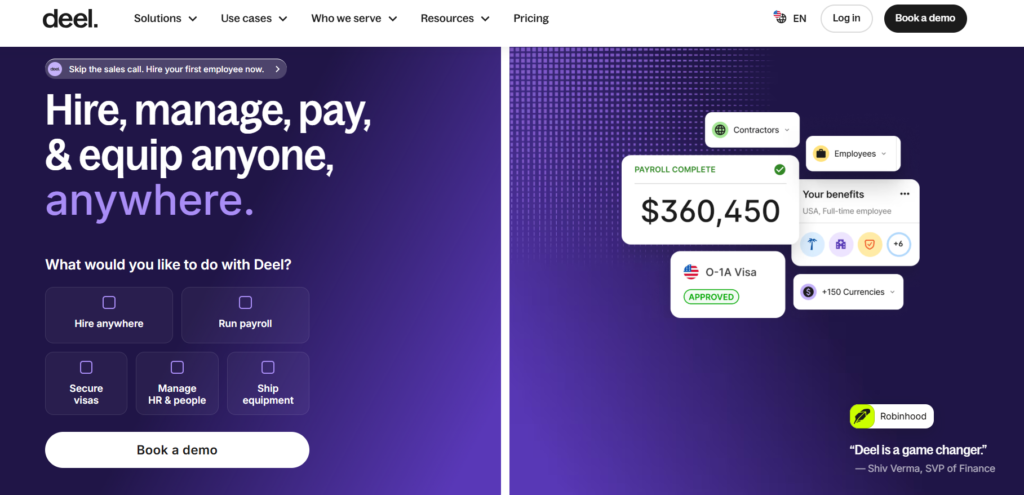
They’ve mapped out the entire global employment journey in search with an ecosystem of product pages, country-specific hiring resources, compliance content, integrations, commercial landing pages, and authority-building assets.
As a result, Deel doesn’t just win visibility. They appear wherever businesses research, evaluate, and execute global hiring.
Let’s dive into Deel’s SEO infrastructure and the pillars that support its SEO strategy.
What Is Deel Actually Optimizing For?
Deel nailed the first question most SaaS companies skip: “Why SEO?” Too many of them start with keywords before figuring out what business outcome they want.
Deel optimizes for three business outcomes:
1. Global Brand Awareness
Global hiring is complex and regulated. No two countries follow the same laws or talent markets. Deel captures them all to become the go-to name in global HR, payroll, and compliance.
Their efforts include:
- International SEO – Target 100+ countries with localized content, translated pages, and hreflang tags
- Branded-defining keywords – Optimize for industry keywords like “global payroll,” “international contractors,” and “hire worldwide” to position Deel as the industry standard
- Glossary pages – Capture top-of-funnel awareness when users search HR terminology
2. Product Discovery & Inbound Pipeline
Deel uses SEO for both demand capture (product discovery) and demand generation (qualified leads into the sales pipeline). The company targets users searching for hiring-related queries, introducing them to its products and driving them into its sales pipeline.
They target high-intent users with:
- High-intent keywords – “How to hire international contractors legally,” as well as “global payroll software”
- Product-led content – Solutions pages, glossary pages, job-title templated pages, country-by-country hiring guides
- Conversion-ready content – Comparison pages, pricing guides, case studies
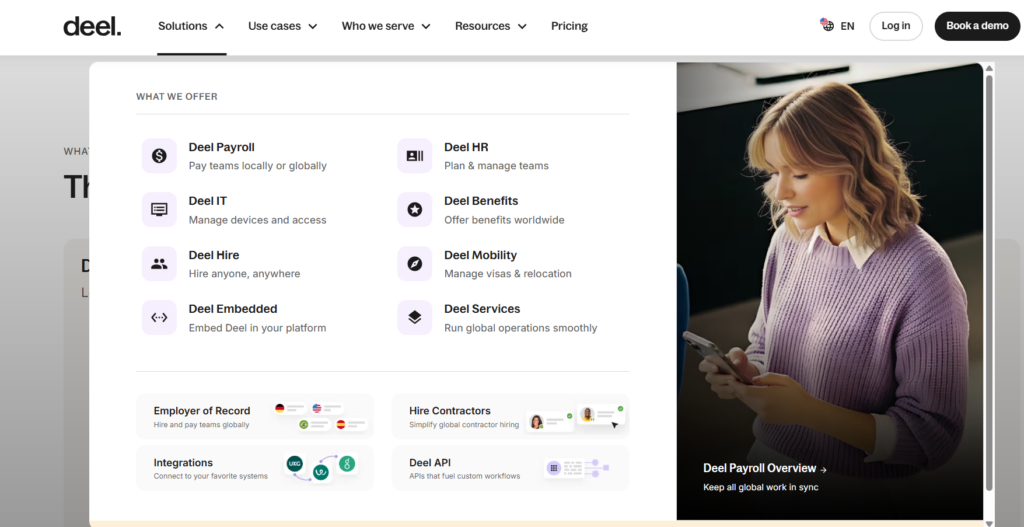
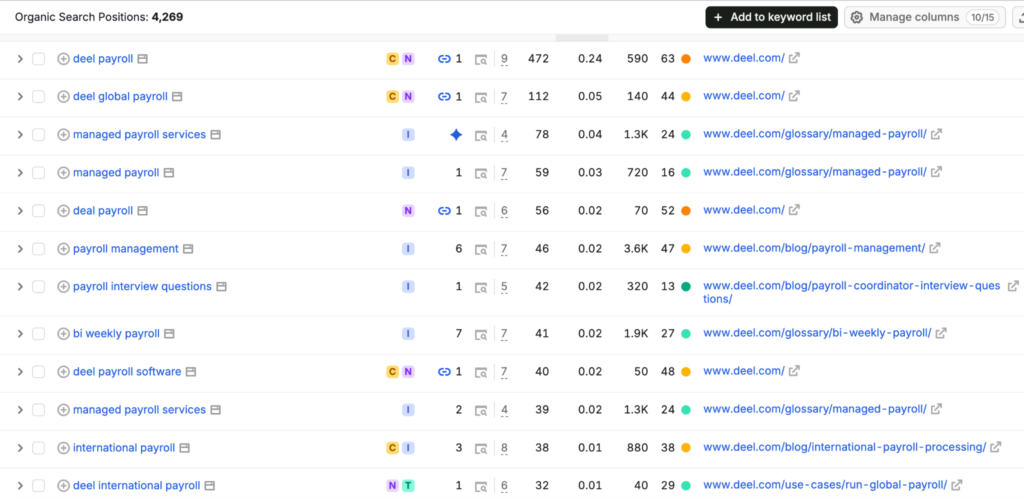
3. Market Expansion & Category Ownership
Deel became the global HR encyclopedia by owning the category of compliant international hiring. They expanded into new markets and categories while localizing content to dominate search in each country.
The goal: become synonymous with global hiring, regardless of where a buyer enters the journey.
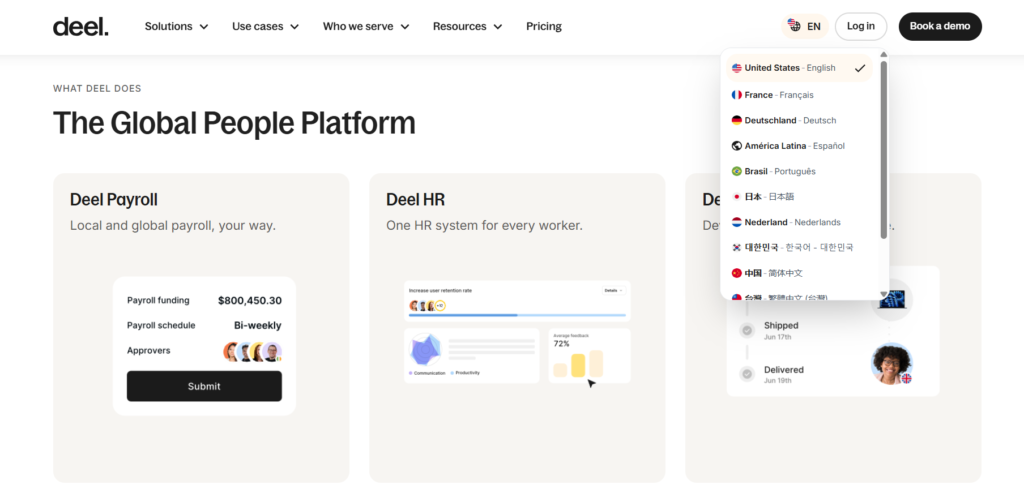
The Key Insight
Deel isn’t trying to rank for “HR software.”
It’s trying to own every meaningful search journey related to global hiring, payroll, compliance, and workforce management with a search strategy that looks less like content marketing and more like market coverage.
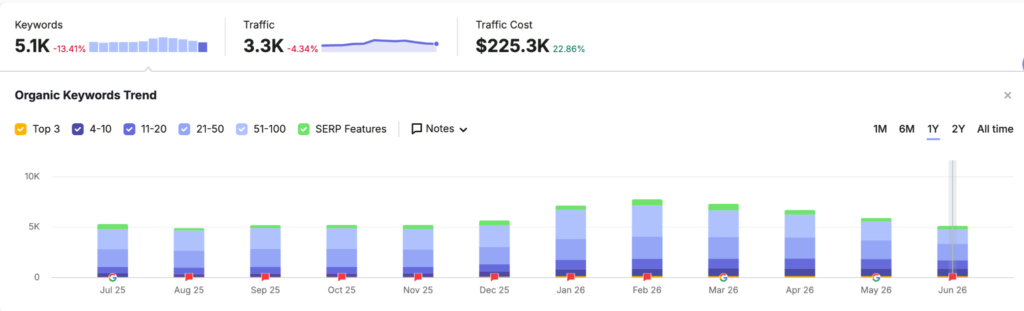
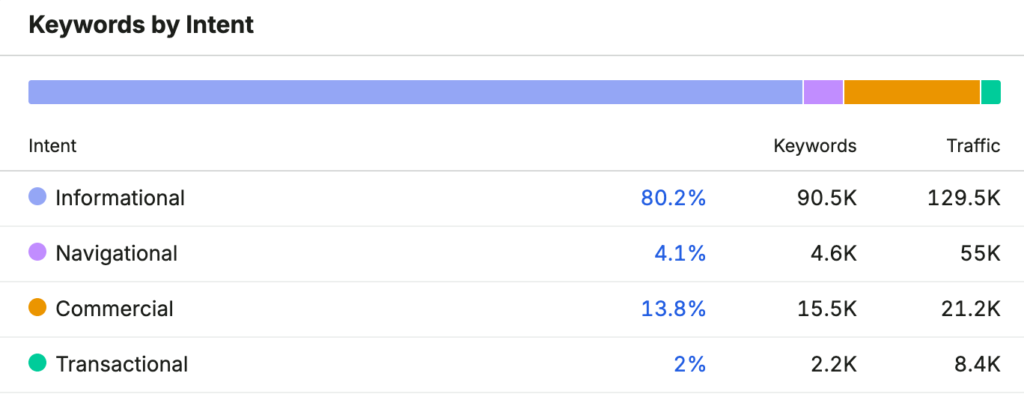
Here’s how they distribute the keywords across intent to address the bigger bucket:
How Deel Shows Up Across Search
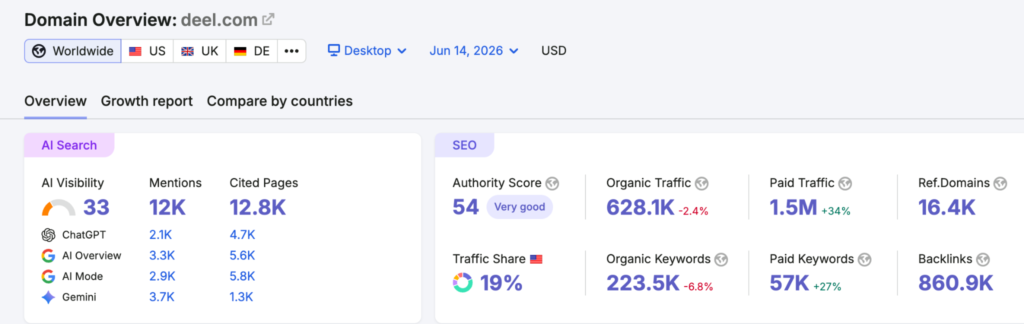
To understand Deel’s SEO strategy, we first need to understand the footprint it has built across search.
Organic Search Visibility
Deel built an organic search engine designed to intercept HR buyers at their moment of friction.
Their content library includes HR glossaries, product pages, and educational resources, creating massive awareness-stage visibility for HR leaders, who, for instance, are looking for immediate compliance answers or tips to save time on administrative tasks.
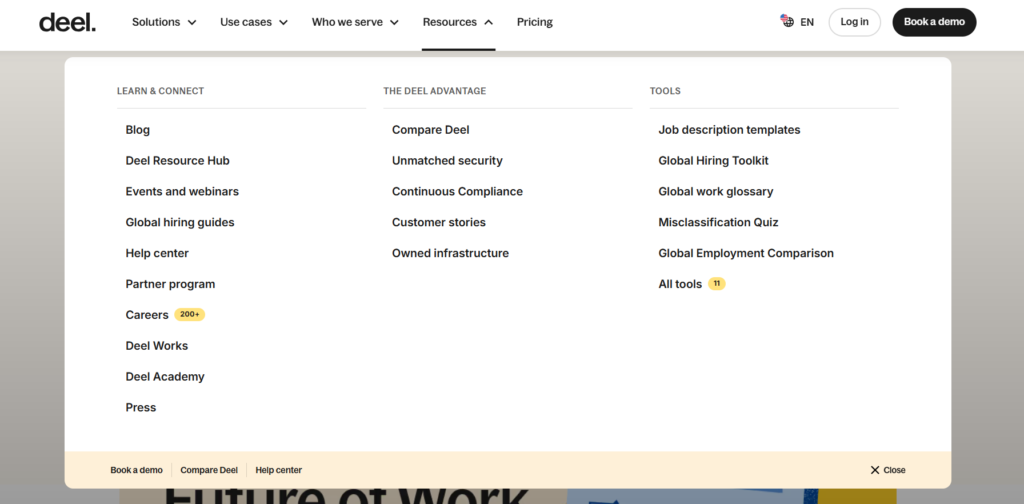
They also capture low-funnel “anxiety-driven” queries through a legally airtight glossary and compliance pages (such as country-specific labor laws and worker misclassification rules).
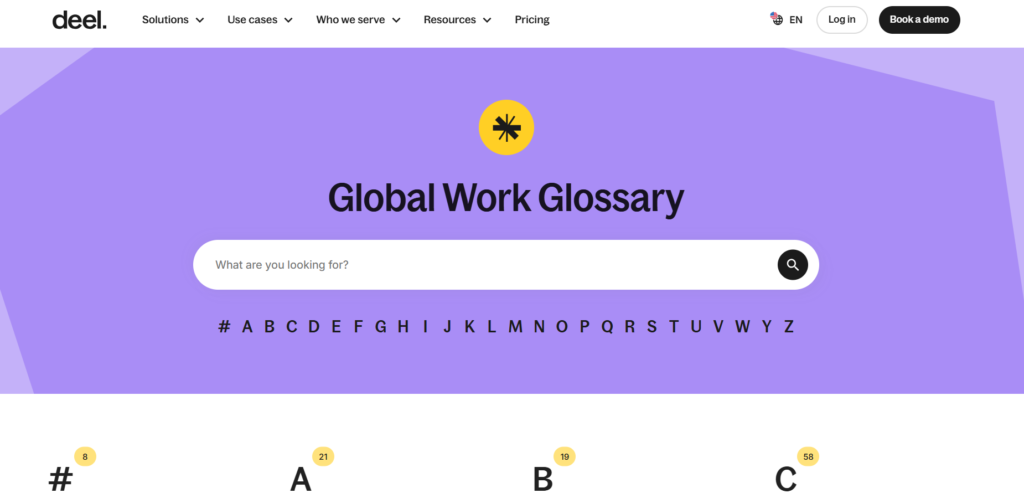
The best part of Deel’s SEO strategy is a library of ungated tools, not just content resources.
Deel has built plug-and-play templates and interactive calculators like localized take-home pay, contractor cost estimators, EOR vs. entity calculators, and more. And they don’t force a form-fill (gate) on these tools.
These free assets drive massive organic traffic, backlinks, and seamless conversions.
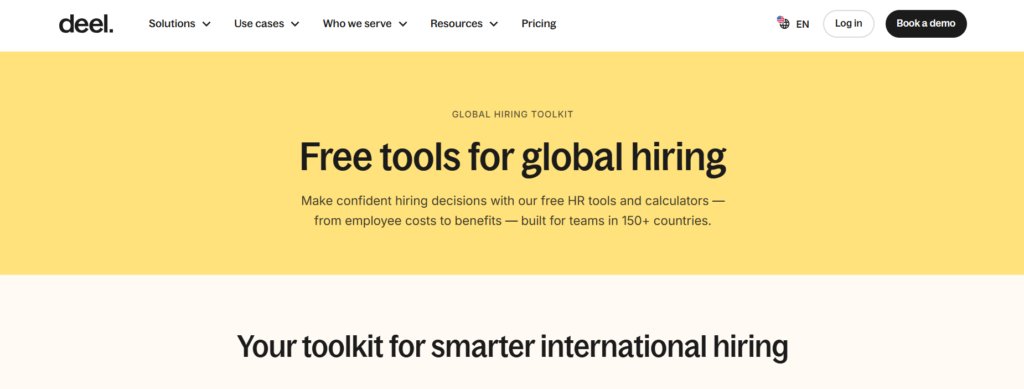
Backed by a multi-language international SEO infrastructure with hyper-localized subdirectories, Deel effectively catches HR buyers exactly at their points of highest friction.
This lets them turn high-intent web searches into customer sign-ups before a competitor can even send a cold email.
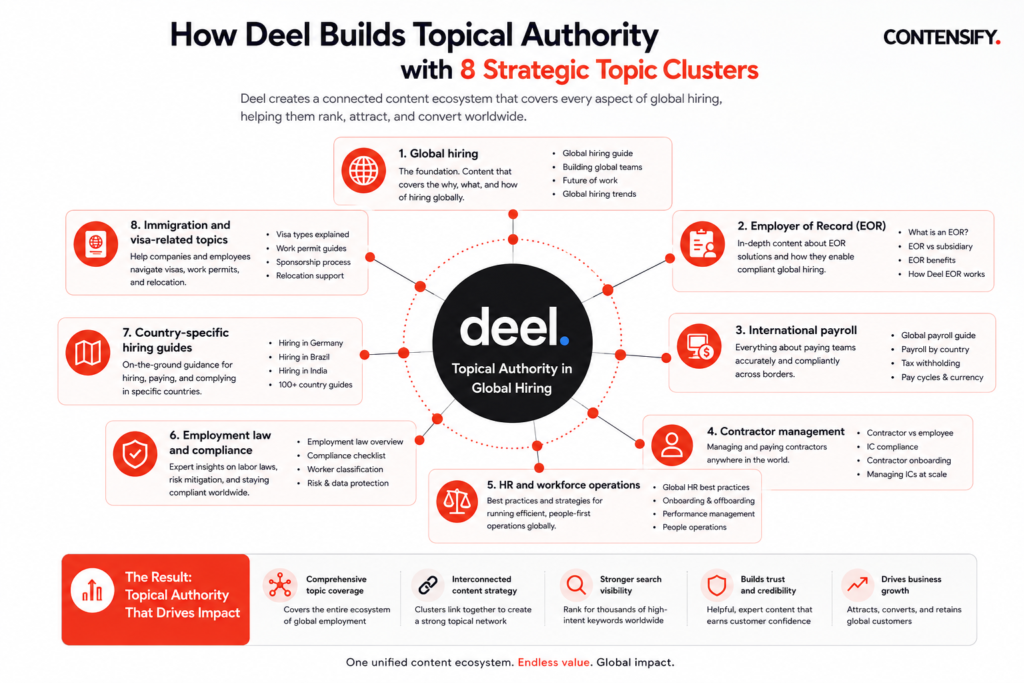
Core Topic Clusters
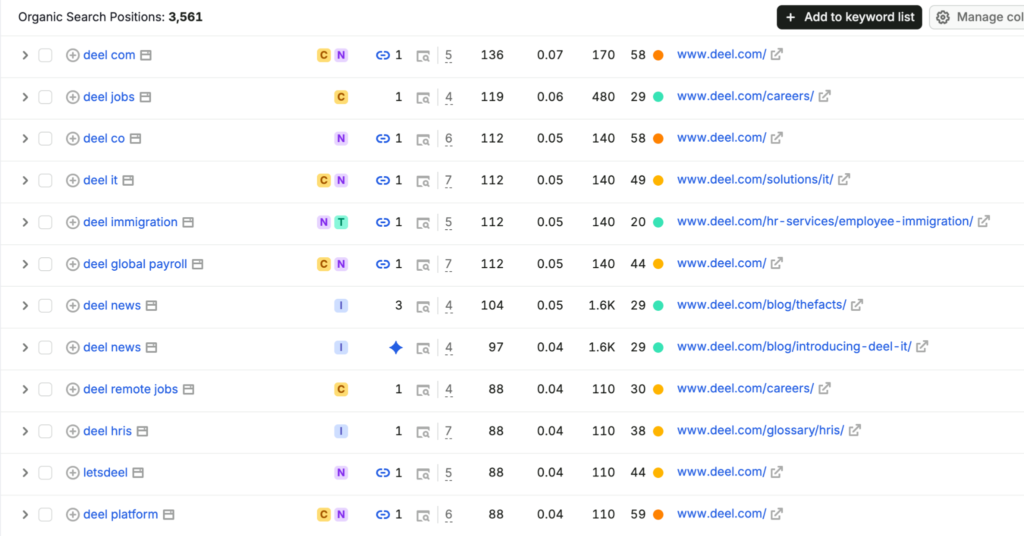
A review of Deel’s ranking pages reveals several recurring themes:
- Global hiring
- Employer of Record (EOR)
- International payroll
- Contractor management
- HR and workforce operations
- Employment law and compliance
- Country-specific hiring guides
- Immigration and visa-related topics
Collectively, these topics cover the challenges companies face when building and managing international teams.
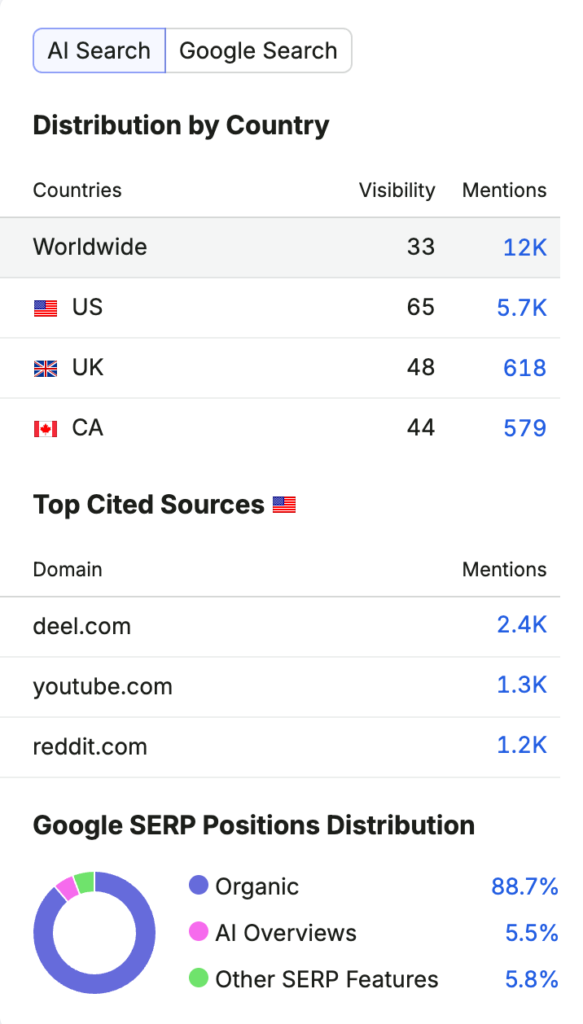
AI Visibility Observations
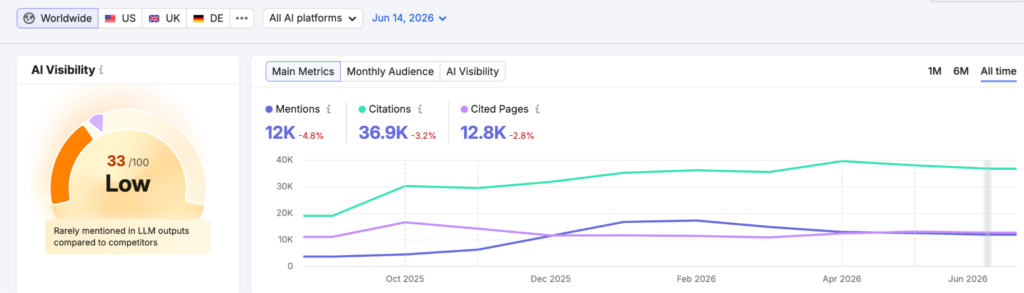
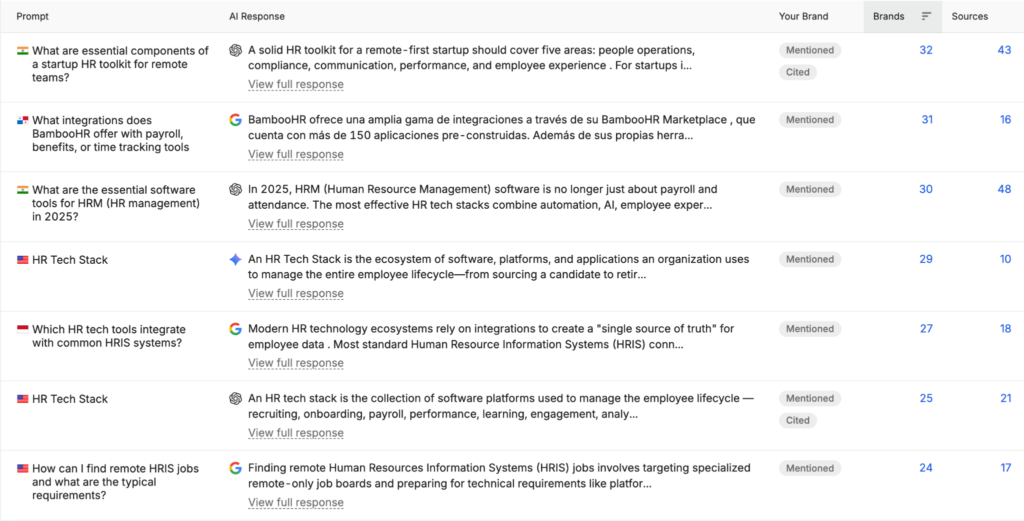
Deel appears frequently in AI-generated answers using content optimized for Generative Engine Optimization (GEO).
It shows up as the default answer for global hiring-related prompts through three specific levers:
- Structural Legibility: Authoritative compliance pages use clear headers and bulleted “answer blocks”, perfect data for LLMs to scrape, summarize, and cite.
- Real-Time Legal Updates: Labor laws constantly change. Deel maintains a real-time global knowledge base for AI models that prioritize fresh, accurate, and compliant data.
- The 360-Degree Trust Bubble: Millions of verified reviews on G2 and Capterra, plus top-tier tech media PR, create multi-source trust signals for AI algorithms.

Hyperlocalized International SEO
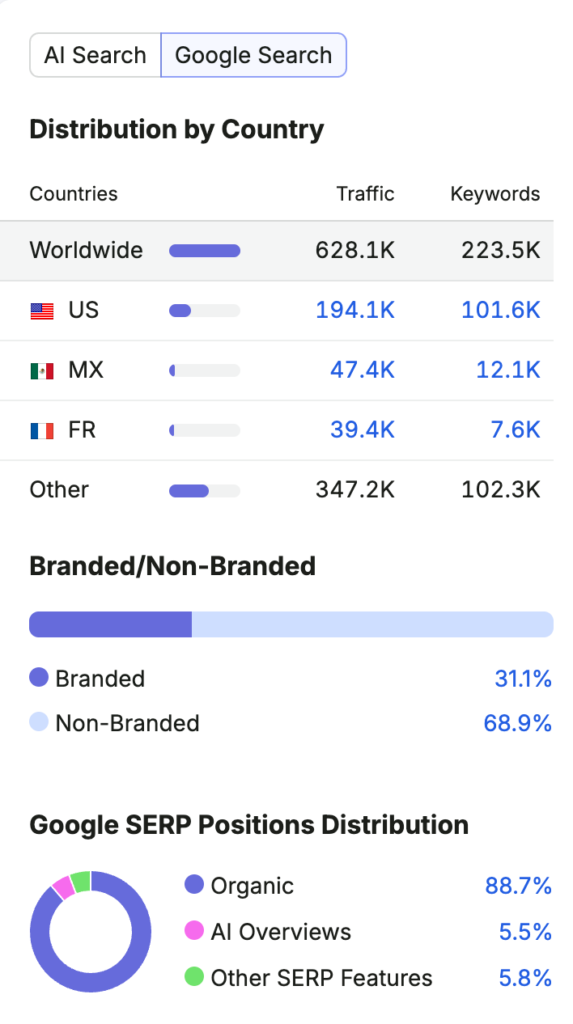
Deel targets 100+ countries to capture international market share without diluting brand authority.
They use localized content and technical optimization, like hreflang tags on a single root domain. This makes sure every backlink and visitor earned globally compounds the main site’s authority, giving an immediate competitive edge in rankings.
In each market, they adapt to regional search behavior: “contractor” vs. “freelancer,” or “payroll” as a “red tape warning” in some regions.
This cultural fluency, customized to country-specific hiring needs, helps Deel rank locally across a lot of countries at the same time.
The 5 Pillars Behind Deel’s Search Infrastructure
A closer look at Deel’s search footprint reveals five core pillars that power its organic growth.
Pillar #1: Country-Based SEO at Massive Scale
One of the strongest components of Deel’s search strategy is its country-specific content infrastructure.
It does not approach global hiring as a single topic but breaks it down by geography, creating dedicated resources around local hiring, payroll, taxation, compliance, labor laws, and Employer of Record (EOR) services.
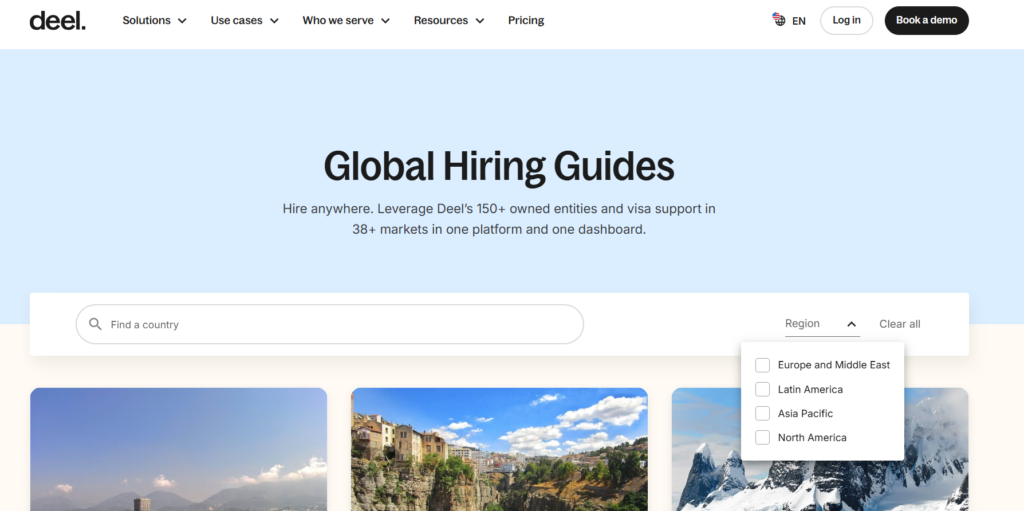
- Why It Works: Country-specific searches signal active hiring intent. Users searching these terms are often looking to enter and hire in a new market.
- What SaaS Companies Can Learn: Align your SEO strategy with your business expansion. Build dedicated search assets for the markets you serve.
Pillar #2: Programmatic SEO Done Right
Deel does not create every page from scratch. They have built structured templates to scale content assets across multiple countries while still addressing local requirements and search intent.
For example, they use repeatable content frameworks across hiring laws, payroll regulations, employment requirements, and country-specific workforce guides.
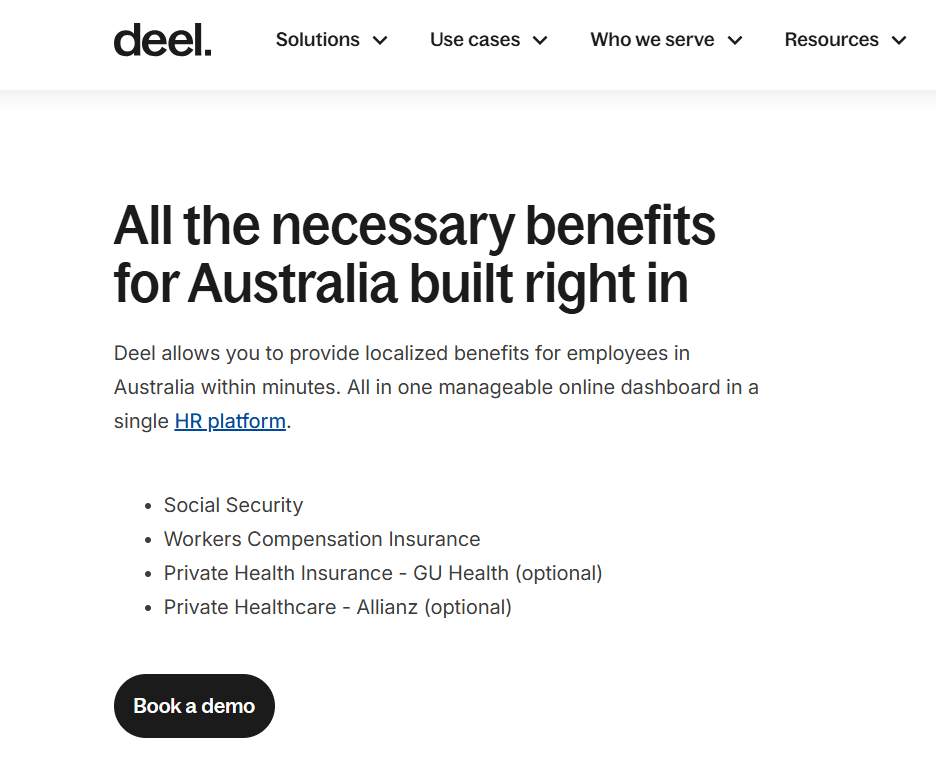
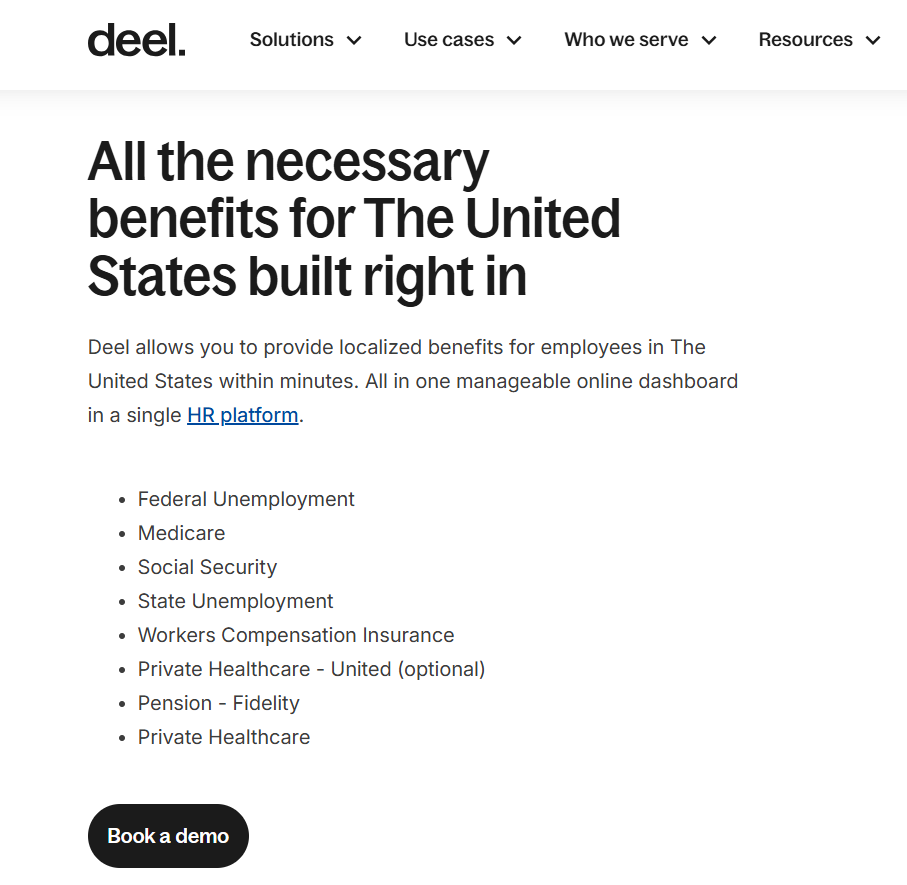
- Why It Works: Repeatable frameworks allow Deel to scale content production while maintaining broad coverage across the global hiring ecosystem.
- What SaaS Companies Can Learn: Programmatic SEO works when each page solves a unique user problem. Scale should be a byproduct of usefulness, not a substitute for it.
Pillar #3: Turning Product Pages Into Search Assets
Many SaaS companies treat SEO and product as separate functions.
Deel integrates them both.
Its search footprint extends across core product categories such as:
- Global payroll
- Employer of Record (EOR)
- Contractor management
- Compliance (employment, tax, labor law)
- HRIS / HR operations (core workforce management layer)
Deel has built dedicated pages around the problems its products solve, instead of blog posts.
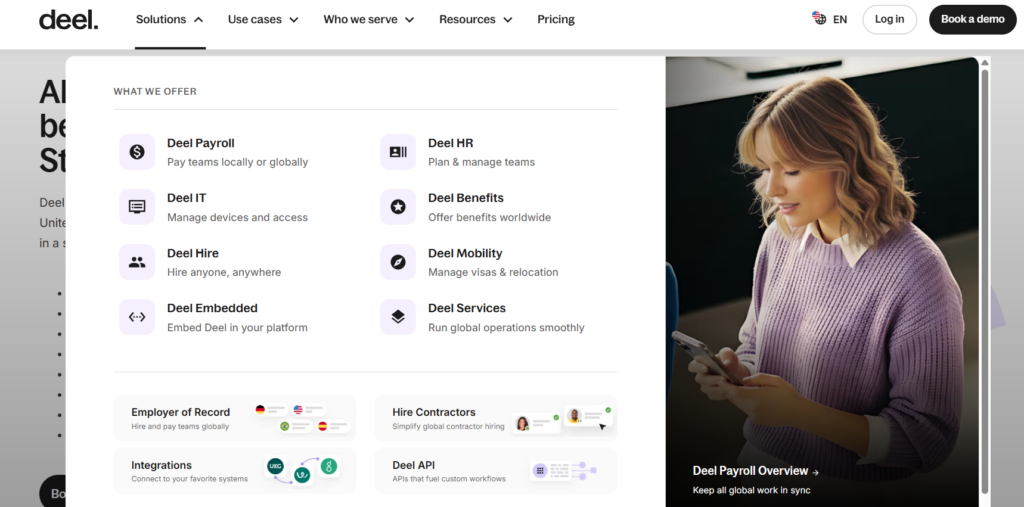
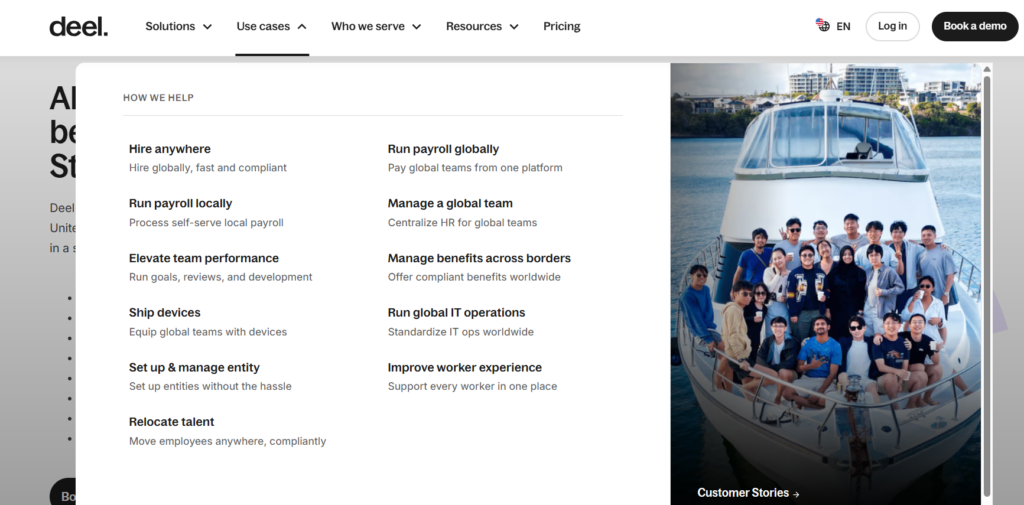
- Why It Works: Search becomes a product discovery channel. Users can discover Deel while actively looking for solutions to their problems.
- What SaaS Companies Can Learn: Don’t treat SEO and product as separate functions. Build search assets around the problems your products solve.
Pillar #4: Expanding Beyond a Single Category
Deel has expanded its search footprint beyond global hiring. It also owns adjacent categories such as:
- Benefits administration
- Immigration & visas
- IT management (device provisioning, access, onboarding infrastructure)
- HR workflows beyond core HRIS (e.g., onboarding, employee lifecycle tools)
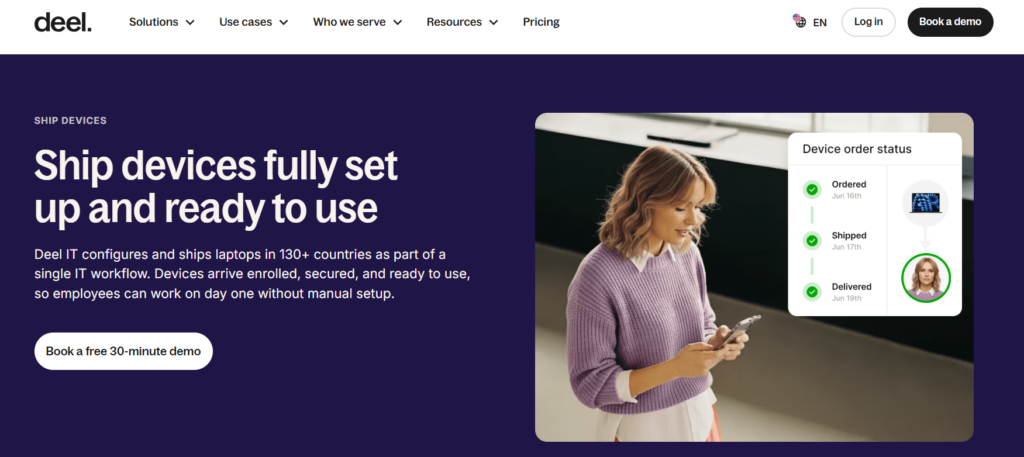
- Why It Works: More categories create more opportunities to reach potential customers throughout their journey.
- What SaaS Companies Can Learn: Don’t limit your SEO strategy to your primary category. Build visibility in adjacent markets that naturally connect to your product.
Pillar #5: Integration Pages to Expand Search Visibility
Deel creates dedicated pages for integrations with major HRIS and accounting platforms. This helps Deel reach people who are already using those tools and looking for software that works with them.
Instead of asking buyers to replace their existing systems, Deel positions itself as a solution that fits into their existing tech stack.
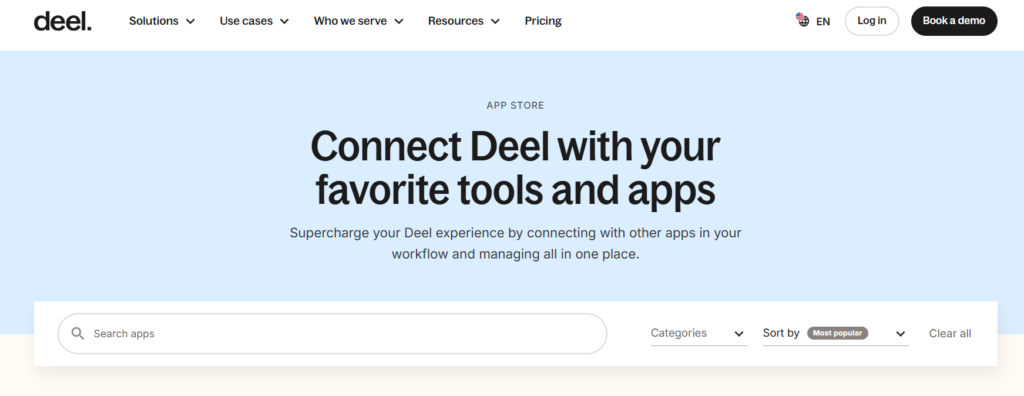
- Why It Works: Integration pages reach users who are looking for tools that fit into their existing software stack.
- What SaaS Companies Can Learn: Integration pages can be both ecosystem assets and customer acquisition channels. Build them around the tools your customers already use.
How Deel Wins At Traditional and AI Search Simultaneously
Deel’s infrastructure makes content easy to discover, rank, and cite across both traditional and AI search.
Here are the core architectural levers of the hybrid strategy:
Structured Schema & Answer-Block Formatting
Deel structures its content using explicit schema markup and clear H2/H3 question headers, definitions, FAQs, and scannable answer blocks. This makes content easier for search engines to interpret and for AI systems to extract and summarize.
Semantic Internal Linking
Deel interlinks country guides, compliance resources, product pages, and integrations. This strengthens topic relationships and distributes authority across the site.
Comprehensive Intent Mapping
Deel covers every stage of the buyer journey. Glossaries and educational content target informational searches, while product, integration, and country pages target evaluation and purchase intent.
Real-Time Data Refresh Cycle
Deel regularly updates content in fast-changing categories like compliance, tax, and employment law to maintain accuracy and relevance for both search engines and AI systems.
Key Lessons SaaS Companies Can Learn from Deel
Here are the 5 biggest lessons for SaaS companies planning to build their organic search visibility:
- Align SEO with business expansion – Build search assets around real business problems in areas your company is growing.
- Own categories, not just keywords – Focus on becoming the go-to resource for an entire market.
- Use programmatic SEO to build depth – Build scalable, data-driven templates to efficiently cover hundreds of unique search use cases at scale.
- Turn products into search assets – Make your product architecture part of your SEO strategy.
- Build authority that compounds – Strong visibility in Google often translates into stronger visibility across AI search.
SEO Strategy Lab’s Take
Deel’s success isn’t the result of one tactic.
It’s the result of aligning international expansion, product strategy, category ownership, and content infrastructure into a single search ecosystem.
That’s why the company doesn’t just rank for keywords. It captures visibility across countries, compliance topics, product categories, integrations, and hiring workflows.
As search continues to evolve, we believe the winners won’t be the companies chasing individual algorithms.
They’ll be the companies building enough authority, relevance, and coverage to be discovered wherever buyers look for answers.
Need help building your search visibility strategy? Reach out to us.