
Ranking at the top of Google still feels like the finish line. You see your page sitting at the top; take a screenshot and call it a win.
But search doesn’t work that way anymore.
For years, SEO has trained us to chase the top spot, as if visibility, traffic, and growth naturally follow. That belief made sense when blue links ruled the page and clicks were predictable. Not today.
Search results are crowded, layered, and increasingly built to answer questions directly on the page, often without sending users to your site at all.
That’s why this blog breaks down why ranking high on the SERP no longer guarantees you’re winning search, and what actually matters now.
Why ranking #1 does not matter as much anymore
Imagine you search for something simple like “best invoicing software.” The first thing you see isn’t an organic result. It’s ads, comparison widgets, reviews, and sometimes an AI-generated answer. By the time the organic listings appear, your attention is already spent.
Even if your page ranks first, it’s pushed down, skimmed past, or ignored altogether. The user got what they needed without clicking, or clicked something else that felt faster or more trustworthy.
That’s the shift.
Here are the reasons why ranking one on Google doesn’t matter as it once did:
1. Search Engines Answer Without Clicks
There was a time when search followed a simple path.
- You searched “best ITAM tool.”
- You saw a few ads.
- Then a clean list of organic results.
Most users scrolled briefly and clicked the first option that looked relevant.
That flow has changed now.
Today, users are often met with AI-generated responses before they even reach the organic results. Google’s AI Overviews now surface direct answers, recommendations, and next steps right on the results page, reducing the need to click through to any website.
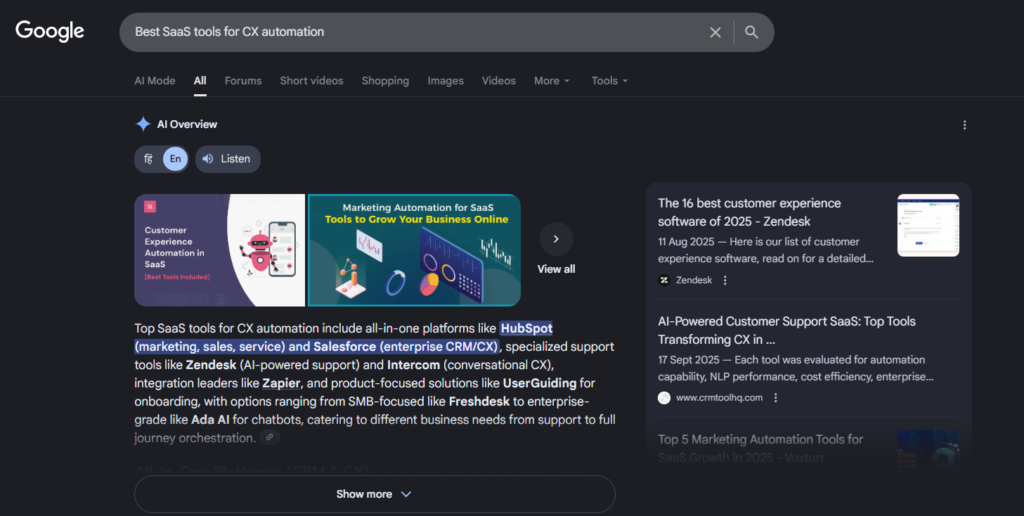
It doesn’t stop there.
With Google’s AI Mode, searchers not even see the traditional SERP. Instead, they interact with a chat-style interface where they can refine questions, get follow-up answers, and resolve their intent without ever leaving Google.
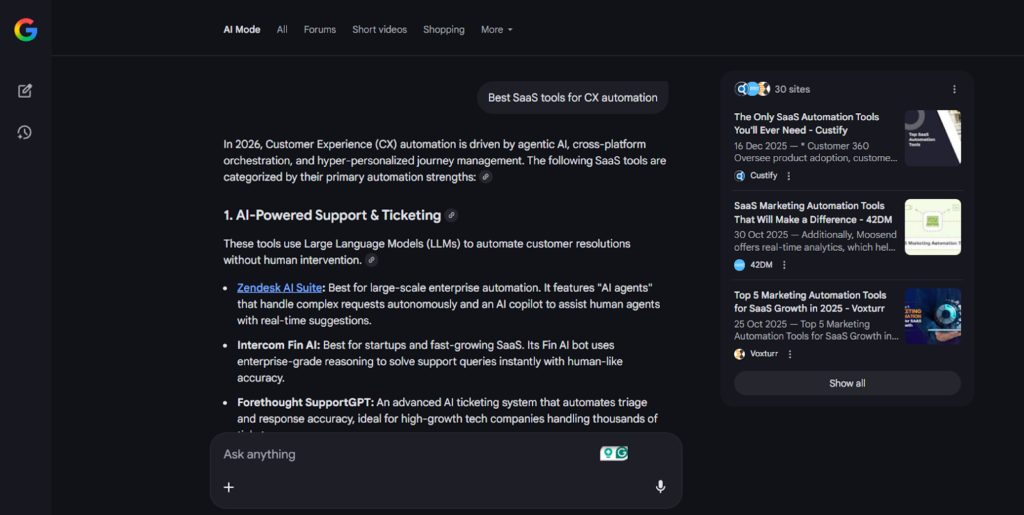
Because of this shift, around 58% of Google searches now result in zero clicks. That means even if your page ranks at the top, a large portion of users who once would have landed on your site never arrive. Ranking first may still look impressive, but it no longer guarantees the traffic it once did.
2. SERP Features Steal Attention
Ranking high no longer means owning the user’s attention. Modern SERPs are packed with elements designed to keep users engaged on Google itself, not on the websites listed below.
Featured snippets pull key information to the top of the page, often answering the query outright. People Also Ask boxes expand endlessly, encouraging users to explore related questions without clicking through. AI Overviews now combine multiple sources into a single response, further reducing the need to visit individual pages.
The result is a widening gap between visibility and engagement. Your page may technically rank at the top, but it’s competing with richer, more prominent elements that attract the click—or remove the need for one entirely. Being seen is no longer the same as being chosen, and high rankings alone no longer reflect real user interaction or impact.
3. Buyer Intent Is Often Mismatched
Ranking high doesn’t always mean ranking right. Many B2B SaaS companies end up owning awareness-stage keywords, terms that attract curious researchers rather than buyers. These searches drive traffic and impressions, but they rarely translate into demos, trials, or revenue.
Take a WhatsApp automation tool as an example. Ranking first for “what is WhatsApp automation” brings volume, but most users are still learning. Compare that to searches like “WhatsApp automation tool pricing” or “WhatsApp automation software for sales teams.” The intent is clearer, the urgency is higher, and the likelihood of conversion is far stronger.
This is why intent mapping now matters more than position. Being first for the wrong type of search adds visibility without impact. Aligning content to revenue-driven intent, even if it ranks lower, often delivers better engagement, a stronger pipeline, and real business results.
4. AI Tools Bypass Traditional Rankings
Earlier, Google was the default, type a query, scan a few results, click a link, and repeat until you found what you needed. Now, with AI tools and LLMs like ChatGPT, Gemini, and Perplexity, users can ask in plain language and get an answer in the exact format and depth they want, without hopping across multiple pages.
Here’s what’s different in the workflow now:
- Old search behavior: query → SERP → click results → read → refine search → click again
- New search behavior: ask → get a synthesized answer → ask follow-ups → decide (often without visiting websites)
And the bigger change is where the answer is pulled from. AI responses aren’t always shaped by the top organic result on Google. They’re increasingly influenced by places where real users share firsthand experiences and opinions, like:
- Reddit threads
- Quora answers
- Community forums
- Product discussions and comparisons
This creates a real gap. You can rank at the top on Google and still not show up in AI-driven research if your brand isn’t present in the conversations these tools are learning from. In other words, ranking alone doesn’t guarantee influence anymore; being mentioned, discussed, and validated across the web does.
5. Weak Content Experience Kills Conversions
Getting users to your site is only half the battle. What happens after they land matters just as much. If the page is hard to navigate, slow to load, or overwhelming to read, users leave, often within seconds.
Search engines pick up on these signals.
Metrics like high bounce rates, low time on page, poor scroll depth, and weak interaction tell a clear story: the content didn’t meet expectations. Even if the page ranks well, poor engagement quietly erodes its impact.
This is where UX begins to influence SEO outcomes.
Clear structure, scannable content, fast load times, and a frictionless path to the next step all affect how users behave, and how search engines interpret that behavior. Ranking may get attention, but experience is what turns attention into conversions.
6. Rankings Ignore Brand Trust
This isn’t a new problem. For a long time, teams have celebrated hitting the top spot on the SERP, only to wonder why a competitor ranking below them keeps getting more clicks and more customers.
The reason is simple authority. Buyers gravitate toward brands they recognize and trust. When a familiar name appears beneath an unknown one, users often scroll past the top result without hesitation. In competitive markets, especially B2B, brand credibility acts as a filter. Rankings may put you in front of users, but trust is what makes them choose you.
7. Rankings Don’t Measure Revenue Impact
Strong rankings often look impressive in reports, but they don’t always reflect business impact. It’s common to see traffic grow while pipeline and revenue remain flat, especially when visitors aren’t arriving with buying intent.
What matters more are metrics tied directly to growth, such as:
- Qualified leads from organic search
- Demo requests or trial sign-ups
- Conversion rates on key pages
- Pipeline contribution and deal velocity from SEO
These indicators show whether search is attracting the right audience and moving them forward. Rankings signal visibility, but revenue-focused metrics reveal whether SEO is actually delivering value.
Conclusion
Ranking at the top is no longer the finish line; it’s just one small signal. Search success today is about visibility where it matters, engagement that converts, and outcomes that tie back to real business growth.
When attention is fragmented across AI answers, SERP features, and new discovery channels, position alone can’t define winning.
If you want to build a search strategy that’s designed for how buyers actually discover, evaluate, and decide today, let’s talk.
We help teams move beyond rankings and turn search into a growth channel that delivers outcomes not just positions.